Backstory

The 39th Missouri Infantry and the Hannibal Muster of 1864 The 39th

The 39th Missouri Infantry was raised at Hannibal in six weeks of late summer 1864, armed with infantry muskets, mounted on horses, and sent out after guerrilla cavalry.

A Regiment In Weeks

Most Union regiments took a season to build and asked their men for three years. The 39th Missouri Infantry asked for one year and took about six weeks. The National Park Service records it as organized at Hannibal, Missouri, between 18 August and 30 September 1864 - and before that organization was...

The Alton Military Prison and Sunflower Island in Illinois Illinois closed

Illinois closed its first state penitentiary at Alton in 1860 as unfit to hold anyone, and fourteen months later the Army reopened it and put 11,764 Confederates through it.

Alton is a prison that nobody can count. The number of men who died there is given three different ways by three institutions, two of them reading the same monument. The number buried on the island offshore is given four ways. What is not in dispute is the building, and the building is the part worth knowing, because the...

The Dependent Pension Act of 1890 and Civil War Mothers A Civil War mother

A Civil War mother could claim twelve dollars a month from the federal government, but first she had to prove in writing that no one else alive was able to support her.

A pension is usually imagined as something a soldier draws. For most of the Civil War generation the money went the other way, to the people the soldier had been supporting when he died. The hardest of those claims to prove belonged to mothers.

Two Kinds Of Claim

The system that grew out of the Civil War recognised two kinds of...

Army Points System of 1945 and the Critical Score of 85 Four days after

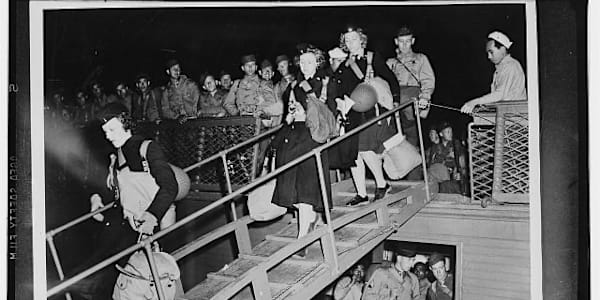
Four days after Germany surrendered, the Army set the number that decided who sailed home: eighty-five points for a man, and a lower, separately recorded one for a woman.

Everyone remembers the day the war in Europe ended. Almost nobody remembers that ending it was, for the United States Army, an accounting problem. Millions were in uniform, the shipping to move them was finite, and the war in the Pacific was not over. Somebody had to set the order of going, and the Army chose not to do it...

The Bolton Act and the Cadet Nurse Corps of 1943 On 15 June 1943 Congress

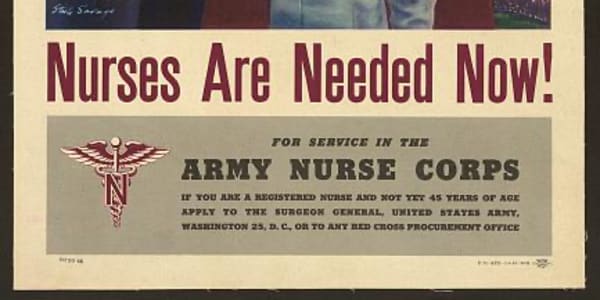
On 15 June 1943 Congress began paying young women to train as nurses, covering tuition, uniforms and a monthly stipend, and forbidding discrimination by race, creed or color.

A young woman entering nursing in 1940 did not pay her way through training with money. She paid in hours. The hospital gave her a bed, a uniform and three years of instruction, and in return she ran its wards, including at night. The arrangement had built American nursing. In the middle of the war, Congress decided it...
Jaguar Hunting in Nayarit Mexico in the 1950s Jaguar hunting was legal in

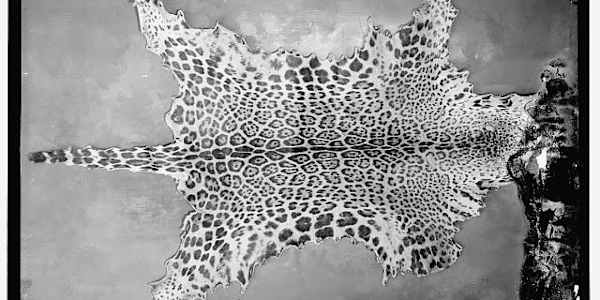
Jaguar hunting was legal in Mexico until 1987, and in the early 1950s American sportsmen were paying Arizona houndsmen to guide them into the Nayarit jungle after el tigre.

Most people place the jaguar in the Amazon. For the first half of the twentieth century its northern range ran up the Pacific side of Mexico and across the border into Arizona and New Mexico, and the men who hunted it for paying clients lived in Tucson and Nogales. The business they ran was legal and lasted into living...

Mountain Lion Bounties and Predator Control in New Mexico In 1915 Congress

In 1915 Congress put one hundred and twenty-five thousand dollars behind federal predator hunters, and by 1919 New Mexico barred its counties from paying a bounty on their kills.

Every cattle range in the Southwest once had the same answer to a stock-killing lion: pay somebody to bring in the carcass. It was a system with no payroll, no districts and no accounting, and it rested on the assumption that a rancher, a drifter or a boy of fourteen would go after the animal if the price was right....

Proving a Birth Without a Birth Certificate in 1954 The national

The national birth-registration area was established in 1915 with ten states and the District of Columbia; not until 1933 were all forty-eight states participating in it.

A birth certificate is a strange kind of proof. It is not a memory of the birth; it is a record made at the time by somebody required to write it down. For most of the nineteenth century, on both sides of the border, nobody was required to write it down. What happened to the people that left behind has a detailed answer.

A...

California Loyalty Oath and the Levering Act of 1950 On 3 October 1950

On 3 October 1950 California gave every public employee thirty days to swear a loyalty oath, and the penalty for not signing was not a hearing but the loss of a paycheck.

The loyalty tests of the early Cold War are remembered as hearings: a committee, a witness, a microphone. California built something quieter and far larger. In the autumn of 1950 the legislature put a printed form in front of every person the state and its counties and cities paid, and made signing it a condition of being...

Army Nurse Corps Relative Rank and Public Law 350 From 1920 until June 1944

From 1920 until June 1944 an Army nurse wore a lieutenant’s bar and held no commission behind it: relative rank gave her the grade, the insignia and the title, and little else.

Rank is usually the simplest fact about a soldier. For Army nurses it was, for twenty-four years, the most complicated one. A woman could be addressed as Lieutenant, wear the bar, and be carried on the rolls in a grade, and still hold no commission. The Army called this relative rank: a legal category invented to give...

Cattle Brands and Cattle Rustling in Arizona and Sonora Before 1895 an

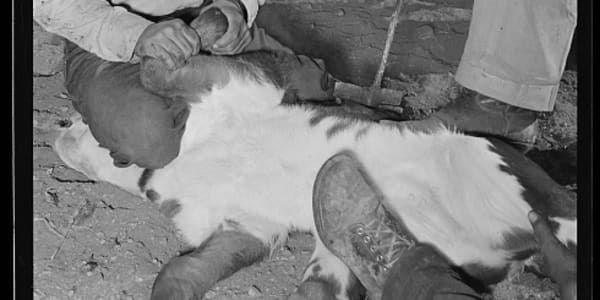
Before 1895 an Arizona cattle brand was filed with the county; the first territorial brand book appeared in 1897, and by 1919 more than seventeen thousand brands were on record.

A brand is a scar, and on open range it was the only title a cow carried. Everything else about ownership — who bought the animal, who bred it, who was owed money against it — lived on paper somewhere else. The law of the cattle country had to be built around reading a mark correctly, and around the men who made it...

The Stock Raising Homestead Act of 1916 and 640 Acres In December 1916

In December 1916 Congress offered homesteaders six hundred and forty acres of western grazing land, then kept the minerals underneath and left the water holes out of the bargain. A homestead is usually pictured as a quarter section and a plough. The law that moved the most ground in the dry Southwest did neither. It dealt in whole sections of grass, asked for fences and wells instead of furrows, and held back the thing that decided whether a claim was worth having.

A Section of Grass

Congress...

The Preventorium and Children at Risk of Tuberculosis From 1909, American

From 1909, American children who had been exposed to tuberculosis but were not yet ill were sent away to institutions called preventoriums, often for months, sometimes for years. A preventorium was not a hospital, and the children inside it were not sick. That was the point of the place. For sixty years American public health ran a network of institutions built to catch children before tuberculosis did, and whether a child qualified had as much to do with the family income as with the lungs....

When Kidnapping Became a Federal Crime 1932 to 1934 The 1932 kidnapping act

The 1932 kidnapping act did not make kidnapping a federal crime. It made it federal to carry the victim across a state line, and for two years that condition decided everything.

A federal crime has to be a federal crime on paper. In the spring of 1934 the Bureau could put agents on a kidnapping in Arizona, work the ransom letters and run the laboratory tests, and still have no settled authority to arrest the man at the end of it. The law that gave it that authority was two years old and...

The Invention of the Stethoscope and Mediate Auscultation In 1816 a Paris

In 1816 a Paris physician rolled a sheet of paper into a tube to listen to a patient’s heart, and within three years had published two volumes naming the sounds of the chest.

Everyone can draw a stethoscope. Almost nobody can say where it came from, or why a doctor still reaches for a two-hundred-year-old idea when there is a machine down the corridor that would turn the same information into a picture. The answer starts with a problem of manners.

Ear Against The Chest

Before 1816 a physician...

The 1933 Gold Ban and the Rare Coin Exemption Executive Order 6102 required

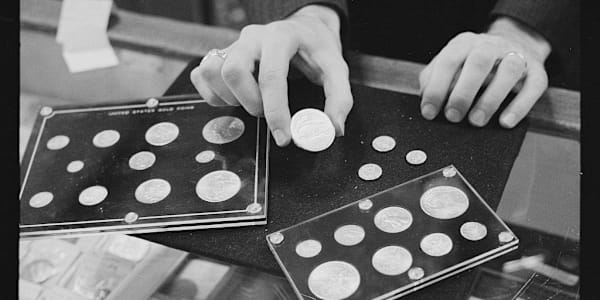
Executive Order 6102 required Americans to deliver their gold by 1 May 1933 on pain of a ten thousand dollar fine, and exempted only coins of special value to collectors.

For forty-one years it was a federal offence for an American to hold gold. The exception was narrow and it was strange. A coin somebody wanted to collect stayed legal. The same metal in any other shape did not.

The Order of 1933

Executive Order 6102 went out on 5 April 1933, a month into Roosevelt’s first term. It required all...

Winnie Ruth Judd and the Arizona State Hospital 1933 On 30 June 1934 the

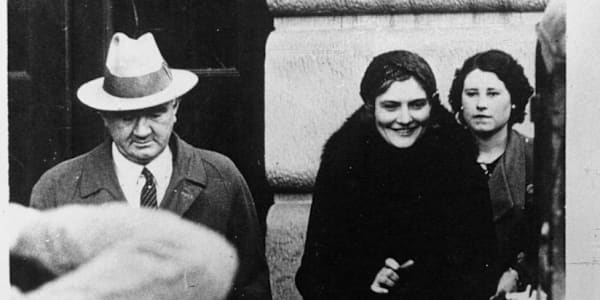
On 30 June 1934 the Arizona State Hospital in Phoenix held 895 patients, took in 353 that year and released 351, and the best known of its patients had arrived from death row.

A bed in the Arizona State Hospital was not something a family could ask for. In 1934 it was something a court ordered, a county paid for, and somebody else had to vacate first.

A Court Order First

The territorial act of 9 March 1885 that created the institution said only this: “There shall be established within and for...

Moonshine After Repeal Untaxed Whiskey in Arizona Prohibition ended in

Prohibition ended in December 1933 and the stills kept running, because the federal tax on a proof gallon of whiskey rose from two dollars in 1934 to nine dollars by 1944.

A legal distillery paid the government by the gallon before its whiskey reached a shelf. A man working a copper condenser in a canyon did not, and the difference between those two prices is the whole of the business that outlived Prohibition.

The Still Outlived Prohibition

Repeal is usually filed as an ending. The Twenty-first...

Henequen Haciendas in Yucatan and the Debt Peonage System By 1916 Yucatan

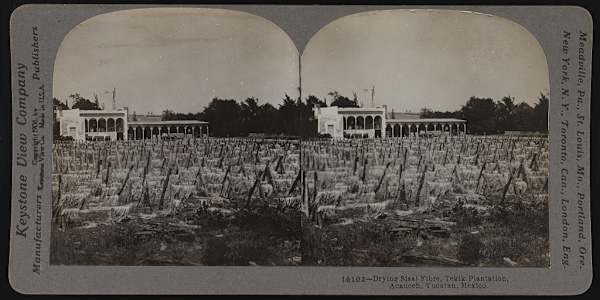
By 1916 Yucatan carried eleven hundred henequen haciendas and 850 rasping mills, and the men who cut the leaves were held there by debts one estate could buy from another.

Sisal reaches most people as a word on a rope label. In Yucatan it had a history. The fibre was cut by hand from a spiny agave, fed to a machine that threw away almost everything it was given, and shipped out of estates that kept their workers on an account book.

Green Gold and Twine

Henequen is Agave fourcroydes, a perennial,...

Rheumatic Heart Disease in Pregnancy in the 1960s A strep throat in

A strep throat in childhood could scar a heart valve, and twenty years later the extra blood volume of pregnancy was usually the first thing to find the damage it left.

Rheumatic heart disease is an illness of children that presents its bill to adults. The fever comes at eight or ten; the valve it scars works quietly for twenty years.

From Throat to Valve

The World Health Organization describes the mechanism plainly: “The disease results from damage to heart valves caused by one or several...