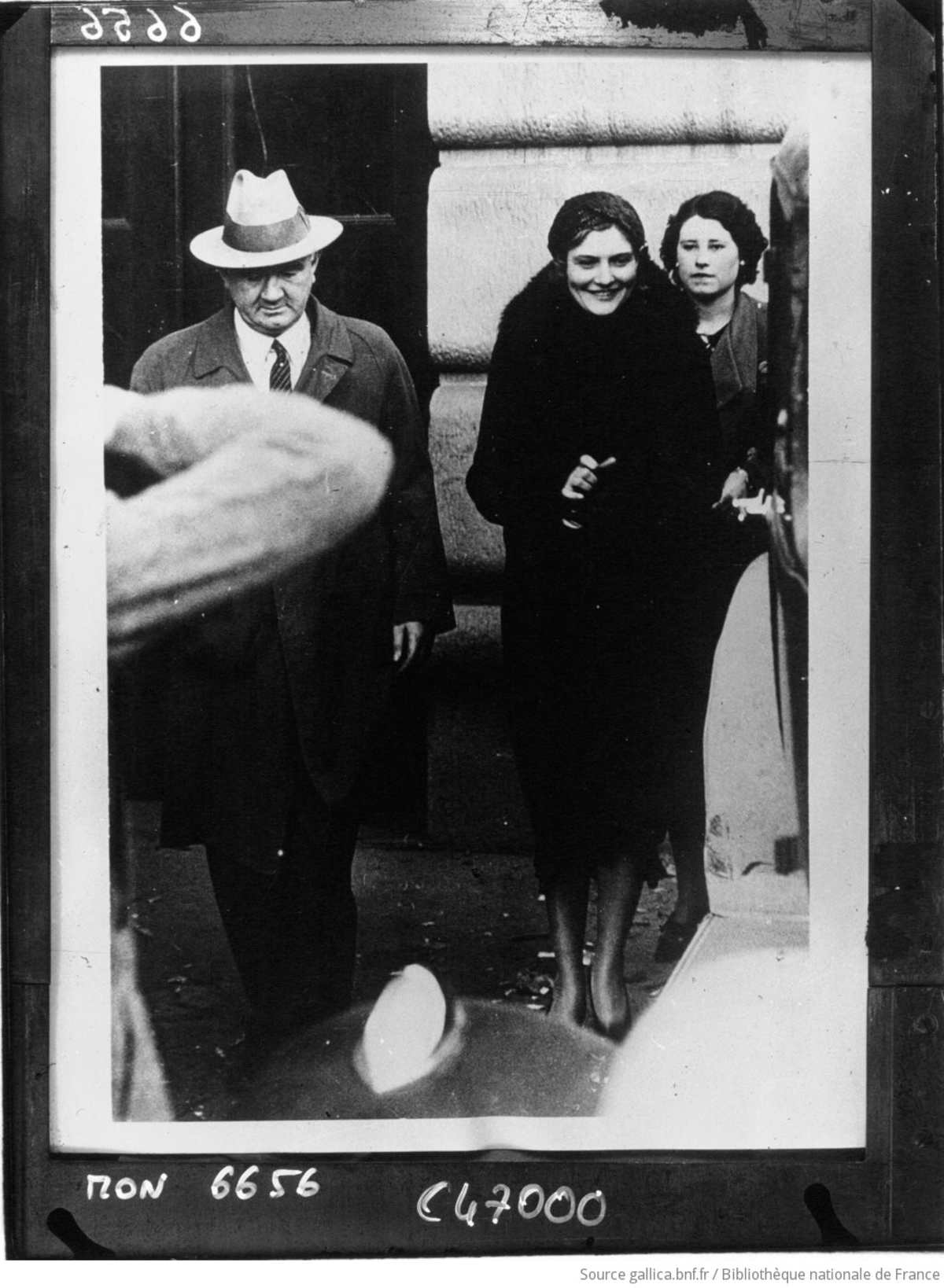
On 30 June 1934 the Arizona State Hospital in Phoenix held 895 patients, took in 353 that year and released 351, and the best known of its patients had arrived from death row.
A bed in the Arizona State Hospital was not something a family could ask for. In 1934 it was something a court ordered, a county paid for, and somebody else had to vacate first.
A Court Order First
The territorial act of 9 March 1885 that created the institution said only this: “There shall be established within and for the Territory of Arizona, an asylum for the insane.” The cost of keeping a patient there, the same act directed, “shall be borne in all cases by the respective counties.” By 1903 the legislature was authorising printed forms for the commitment of people “adjudged by competent courts and tribunals to be insane.” And in 1924 the superintendent asked the state to change the law “to permit admission of patients on emergency and voluntary commitments” — a request that says plainly what the law did not then allow.
The Hospital in 1934
The hospital took its first patients on 14 January 1887, when the Arizona Gazette watched “a procession of six, four-horse coaches” go down Washington Street to it. The building raised for them was reckoned to accommodate about 280.
By 30 June 1934 it held 895. In that one year it received 353 patients and released 351, and it fed, housed and nursed each of them at 61.7 cents a day. Arizona ran a single state institution for the whole of its mental illness, and the gap between those two numbers was its waiting list.
Two Trunks in 1931
On the night of Friday 16 October 1931 Winnie Ruth Judd went to the Phoenix apartment of two friends for dinner. The Arizona State Library’s account of what followed is one sentence: “A gun was pulled and all three women were shot.” Agnes Anne LeRoi and Hedvig Samuelson died of it. Judd did not.
Two days later she arrived in Los Angeles with two trunks. What was inside them made the case a national story within a day, and it has been known ever since as the trunk murders.
From Death Row
Her trial opened on 19 January 1932 at the Maricopa County Courthouse in downtown Phoenix. She admitted killing the two women and said she had done it in self-defence. The jury convicted her of the premeditated murder of LeRoi, the court sentenced her to hang, and she was taken to death row at the state prison at Florence.
Shortly before the execution date she was brought back to a courtroom for an insanity hearing, and in 1933 she was found insane and moved from the prison to the hospital in Phoenix. George W. Stephens, the hospital’s own superintendent, had testified for the defence at her trial. The man who told a court she was ill was the man who then had to find her a bed.
Seven Escapes
She stayed 38 years. She escaped seven times, the last of them for more than six years: she reached northern California, took the name Marian Lane and worked as a nanny until a police investigation found her. She was returned to Phoenix in 1969, and parole was refused. In December 1971 Governor Jack Williams signed a pardon. She went back to California and died in 1998.
Whether the verdict was sound has never been settled. She said self-defence and a jury said premeditation; her brother printed a pamphlet for the defence; and people have argued ever since that she cannot have managed the aftermath alone. A university account of the case opens by saying that no one will ever know for certain.
What the Novel Takes
Trail of Shadows, the second Bee Adkins novel, puts a fictional patient on that ward. Viola Adkins breaks down in the summer of 1934, a Tucson hospital says the case is beyond it, and she goes by ambulance to the state facility in Phoenix. The woman who brushes her hair every day and talks her back into speech turns out to be another patient. A nurse tells her who it is, and says she has been there over a year — which the record bears out, since Judd arrived in 1933. When the doctors release Viola, one of the reasons they give her husband is that they need the bed.
The same chapter of that novel carries the June Robles kidnapping, covered here: https://duanekeelingbooks.com/blog/the-june-robles-kidnapping-of-1934-in-tucson-arizona
Trail of Shadows: https://duanekeelingbooks.com/books/trail-of-shadows-bee-adkins-book-2
Sources
The Arizona State Hospital, Milestones: a history of seventy-five years of progress, 1887 to 1962, digitised by the Arizona State Library, Archives and Public Records
The Arizona State Library, Archives and Public Records, its Arizona Memory Project feature on Winnie Ruth Judd
The William L. Clements Library at the University of Michigan, the finding aid to the Winnie Ruth Judd papers, 1931 to 1933
The Arizona Historical Society Library and Archives, the finding aid to the Winnie Ruth Judd Collection
Arizona State University, its news office, on a journalist who interviewed Judd at length
Bibliothèque nationale de France, its press photography collection, the featured photograph of Winnie Ruth Judd leaving court, by the Acme Newspictures agency, 1933, city not recorded