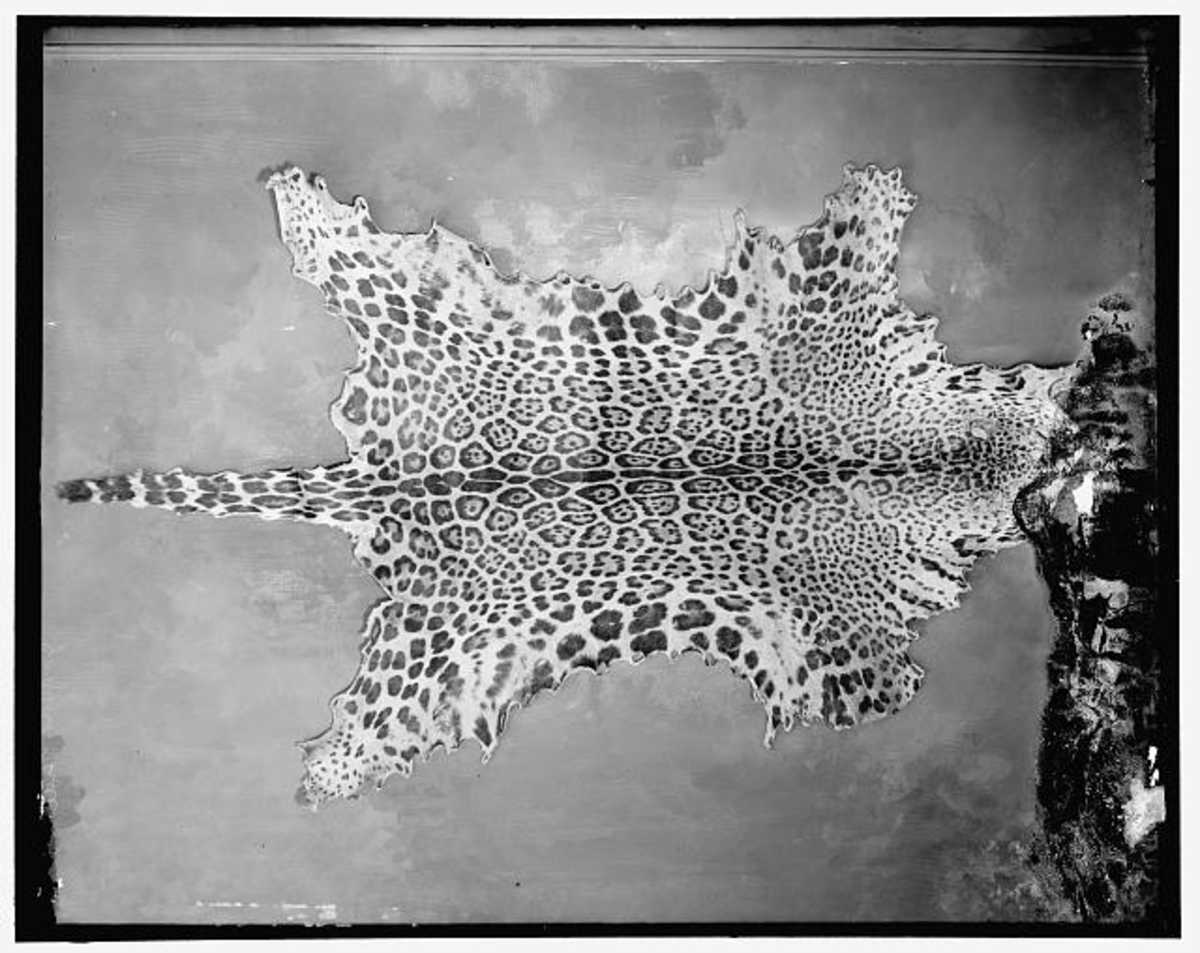
Jaguar hunting was legal in Mexico until 1987, and in the early 1950s American sportsmen were paying Arizona houndsmen to guide them into the Nayarit jungle after el tigre.
Most people place the jaguar in the Amazon. For the first half of the twentieth century its northern range ran up the Pacific side of Mexico and across the border into Arizona and New Mexico, and the men who hunted it for paying clients lived in Tucson and Nogales. The business they ran was legal and lasted into living memory.
The Cat In Nayarit
The United States Fish and Wildlife Service records the jaguar as historically present in twenty-one countries of the Americas, from the United States south into Argentina. An adult runs five to eight feet from nose to the tip of the tail and weighs between eighty and three hundred and forty-eight pounds, the extremes of that range being exceptional.
Nayarit sits at the humid end of it. The lower Río Grande de Santiago crosses the state to the sea through the wetlands now protected as the Marismas Nacionales Biosphere Reserve. Pronatura Noroeste still tracks collared jaguars on farmland near Santiago Ixcuintla, at a density it gives as two to four animals for every hundred square kilometres.
Hunters From The North
The clearest surviving picture of how this worked is a first-person account. Jack Tooker, an Arizona predator hunter, published Jaguar on a Rope in the October 1953 number of Outdoor Life, describing a night hunt along the Santiago River near the bridge where the Mazatlan to Guadalajara highway crosses it. He had worked the same coast before, from Ciudad Obregon down to San Blas. The dogs were not his: they were five of the smallest hounds he had ever seen, raised and trained locally for tigre.
Calling The Cat
Calling was the heart of it. Tooker and his companions practised tigre calls on an old coonhound horn, crouching to put the bell almost to the floorboards of the truck so that the sound carried as something distant rather than something present. A jaguar that answers walks towards the hunter, and that is the whole economy of the method: a cat that cannot be found in thick cover can be persuaded to leave it.
Hides And The Market
What paid for all of it was the skin. The Wildlife Conservation Society, surveying jaguar hunting in Mesoamerica, states plainly that before 1975 a thriving international market in jaguar hides drove hunters far into the forest after the animal. A study prepared for the Convention on International Trade in Endangered Species puts the number of jaguars killed in the Brazilian Amazon alone, across the peak years of that fashion, at about one hundred and eighty thousand. A sportsman shipping one hide home to Chicago sat at the small and respectable end of an industry.
The Law Arrives
The law closed in from three directions, none of them quick. On 30 March 1972 the United States listed the jaguar as endangered from the border with Mexico southward, at 37 Federal Register 6476. The Endangered Species Act superseded that statute in 1973, and endangered status was extended across the whole of the animal’s range, the United States included, with effect from 21 August 1997. The species went into Appendix One of the international trade convention in 1975, and Mexico has prohibited the taking of jaguars since 1987 under an indefinite closed season covering hunting, capture and trade. Guiding did not stop at once: the 1997 federal rule records Mexican nationals prosecuted in 1989 for bringing pelts in illegally and still running jaguar hunts.
The bounty era that came before all this is a separate story: https://duanekeelingbooks.com/blog/mountain-lion-bounties-and-predator-control-in-new-mexico
What The Novel Takes
Road to Redemption puts Bee Adkins on that road in the spring of 1954. A letter reaches Redington Pass from the president of a Chicago oil company asking him to guide a jaguar hunt into Nayarit; he names a price of eleven or twelve hundred dollars and expenses, and it is accepted by long-distance telephone three days later. He crosses at Nogales with two dogs and declared rifles and drives eight hundred miles south. At Tepic a plantation owner has assembled a dozen local hounds and gourd callers to work the jungle at night. The chapter is built from four published accounts of that hunt, one of them written by the client himself.
Road to Redemption: https://duanekeelingbooks.com/books/road-to-redemption-bee-adkins-book-3
Sources
United States Fish and Wildlife Service, species profile for the jaguar
Federal Register, volume 62, the rule extending endangered status to the jaguar, 22 July 1997
Wildlife Conservation Society, Jaguar Hunting and Trafficking in Mesoamerica
A study on the illegal trade in jaguars prepared for the Convention on International Trade in Endangered Species of Wild Fauna and Flora
Pronatura Noroeste, on the jaguars of La Papalota, Nayarit
Outdoor Life, Jaguar on a Rope by Jack Tooker, October 1953
Library of Congress, Prints and Photographs Division, the Harris and Ewing photograph collection, the featured photograph of a jaguar hide, photographed between 1910 and 1920, place not recorded