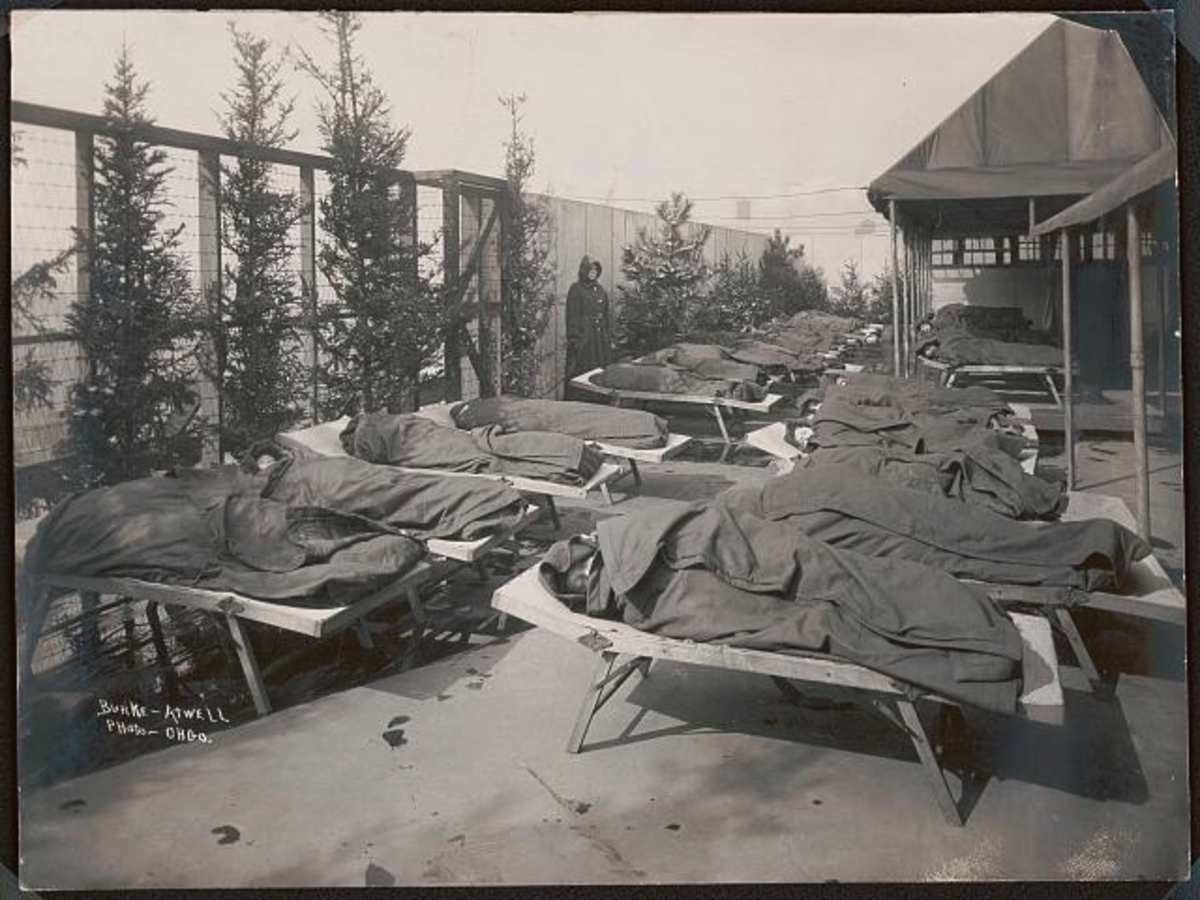
From 1909, American children who had been exposed to tuberculosis but were not yet ill were sent away to institutions called preventoriums, often for months, sometimes for years. A preventorium was not a hospital, and the children inside it were not sick. That was the point of the place. For sixty years American public health ran a network of institutions built to catch children before tuberculosis did, and whether a child qualified had as much to do with the family income as with the lungs. The word has almost gone now, and so have the buildings.
What a Preventorium Was
The idea followed the Austrian paediatrician Clemens von Pirquet, whose 1907 work on tuberculin made it possible to find infection in a child who looked perfectly well. The National Library of Medicine describes the pretubercular child as one infected with the organism but without active disease, and the preventorium as a place for those who did not yet have the disease but might, authorities feared, be susceptible to it.
A 2024 study at Middle Tennessee State University names the thing that set them apart from other children’s institutions. Preventoriums separated children from families.
The First Preventorium
The Newark Public Library, which holds its annual reports, records it as founded in Lakewood in 1909 and moved to Farmingdale in 1910. The Middle Tennessee study fills in the rest: it opened in July 1909 as the Cleveland Cottage at the Lakewood Hotel with room for forty children, and the Farmingdale site received its first child patients on 28 April 1910. Nathan Straus, a part owner of the hotel, gave his interest in it to the trustees.
It took New York City children between six and fourteen, and later opened a wing it called an infantorium, for those under two.
Who Was Sent
By the early 1920s, the National Library of Medicine records, dozens and perhaps hundreds of such institutions were running across the United States.
Who went is the uncomfortable part. Children who reacted to the tuberculin test boarded a train for a preventorium if a bed was available. All of the youngsters at preventoriums, the Library states flatly, were immigrants or native-born poor children. The care was free — which meant the families who used it were the families not in a position to refuse.
Rest and Fresh Air
The regime was the sanatorium’s, minus the disease. Children spent nearly the whole day in the open air, the same treatment given to patients with active tuberculosis, and rested and napped through it. They were fed milk, eggs and fatty food in quantity. The day ran to a strict clock for waking, eating, play and rest, and the stated goal was to gain weight and learn healthy habits.
Families were discouraged, and sometimes actively prevented, from visiting, even where neither parent had tuberculosis. And there was no standard length of stay.
Why They Closed
Medicine ended it. Streptomycin arrived in 1944 and isoniazid in 1952, and tuberculosis became something treated in a clinic rather than a reason to take a child out of a house. A review in Social History of Medicine of Cynthia Connolly’s history of the movement sets out drug therapy, BCG vaccination and community care as the combination that left the preventorium with no role, and notes that the institutions held on by taking other sick and needy children before winding up by the end of the 1960s.
What the Novel Takes
Tucson knew the disease from the other end: the Pima County Public Library records thousands of tuberculars moving to the city around the First World War for the dry air, known locally and unkindly as lungers. Another Arizona institution of the same decade: https://duanekeelingbooks.com/blog/winnie-ruth-judd-and-the-arizona-state-hospital-1933
Trail of Shadows, book two of the Bee Adkins Series, puts a ranching family in that country in the late 1930s and then puts a government letter on the kitchen table. The letter speaks of signs of possible tuberculosis, an undernourished condition, a preventative care facility. A county car comes up the yard, and a woman with a clipboard explains that the goal is to return the child once she is stronger. Her father reads the letter correctly, and what he reads in it is not a cough. A later chapter puts a younger sister inside the place: grey dresses, bleach in the corridor, and a rule that you do as you are told or the visits stop.
Trail of Shadows: https://duanekeelingbooks.com/books/trail-of-shadows-bee-adkins-book-2
Sources
Middle Tennessee State University, the 2024 thesis by Samantha Brickel on the children’s preventorium
The National Library of Medicine, its essay on the sanatorium and the preventorium by Cynthia Connolly of the University of Pennsylvania School of Nursing
The Newark Public Library, its archival record of the Tuberculosis Preventorium for Children
Social History of Medicine, its review of Cynthia Connolly’s history of the preventorium
Pima County Public Library, its history of Tucson and tuberculosis
Library of Congress, Prints and Photographs Division, the Goldsberry collection of open-air school photographs, the featured photograph of the rest period at an open-air school on a Chicago roof, by Burke-Atwell, between 1900 and 1920