In December 1916 Congress offered homesteaders six hundred and forty acres of western grazing land, then kept the minerals underneath and left the water holes out of the bargain. A homestead is usually pictured as a quarter section and a plough. The law that moved the most ground in the dry Southwest did neither. It dealt in whole sections of grass, asked for fences and wells instead of furrows, and held back the thing that decided whether a claim was worth having.
A Section of Grass
Congress approved the stock-raising homestead on 29 December 1916. The statute made it lawful for any person qualified to make entry under the homestead laws to make a stock-raising homestead entry for not exceeding six hundred and forty acres of unappropriated unreserved public land, provided the Secretary of the Interior had first designated that land as stock-raising lands. The Secretary could designate only country that was chiefly valuable for grazing and raising forage crops, did not contain merchantable timber, and was not susceptible of irrigation from any known source of water supply. The Homestead Act of 1862 had entitled a settler to a hundred and sixty acres. This offered four times as much, on the stated understanding that the ground could never be farmed.
The Water Left Out
Section ten is the part nobody quotes. Lands containing water holes or other bodies of water needed or used by the public for watering purposes, it says, shall not be designated under the act at all. Such places could be reserved instead, with access to them withdrawn from entry. A man could therefore file on six hundred and forty acres of grass and know, by the terms of the designation that made his entry possible, that any dependable surface water had been kept out of the bargain. What he had was grass, and the right to go looking for water underneath it.
First in Time
No federal patent conveyed a water right in any case. That was state business, and New Mexico had settled it before statehood. The constitution adopted in 1912 declared the unappropriated water of natural streams to belong to the public and to be subject to appropriation for beneficial use, and made beneficial use the basis, the measure and the limit of the right. Priority ran by the calendar: in a shortage, the right to use water is determined by the chronological order in which the water was put to beneficial use. A cattle outfit that had watered a herd on the same river for thirty years held the senior claim, and a new patent four miles away did not move it.
Improvements Instead of Crops
Proving up changed with it. Instead of cultivation as required by the homestead laws, the entryman had to make permanent improvements upon the land entered, before final proof was submitted, tending to increase its value for stock-raising purposes, of the value of not less than one dollar and twenty-five cents an acre, and at least half of them had to be in place within three years of entry. On a full section that is eight hundred dollars of fence, tanks, corrals and well casing on country the government had already certified could not be irrigated.
The Minerals Stayed Federal
Section nine kept the rest. All entries made and patents issued under the act were subject to a reservation to the United States of all the coal and other minerals in the lands so entered and patented, together with the right to prospect for, mine, and remove the same. The Bureau of Land Management still describes the arrangement in those terms, the surface rights privately owned while the subsurface mineral rights belong to the federal government, and calls the split estate the legacy of the 1916 act. Congress repealed the homestead laws in 1976. The reservations written into the patents outlived them.
What the Novel Takes
Path of the Peacemaker opens its eighth chapter on a family four months into one of these claims. The Adkinses have six hundred forty acres in the Animas country of southwestern New Mexico, a half-built cabin, a third well dry at twenty-two feet, and a river they can see from the rise and cannot reach, because the Diamond A holds the ground between. What follows is the pressure the statute built in: cattle scattered, fence posts pulled up, a Diamond A steer behind a neighbor’s barn with the brand crudely altered. Bee Adkins reads sign better than men twice his age, which is how he comes to be drawing wages from the outfit squeezing his own people.
The horse trade on the same ranges: https://duanekeelingbooks.com/blog/the-remount-rush-how-the-great-war-emptied-the-west-s-horse-ranches
Path of the Peacemaker: https://duanekeelingbooks.com/books/path-of-the-peacemaker-bee-adkins-book-1
Sources
The act of 29 December 1916, chapter 9, as printed in volume 39 of the United States Statutes at Large, read through the Government Publishing Office
The Bureau of Land Management, on split estate and on its own history of the public lands
The Utton Transboundary Resources Center at the University of New Mexico School of Law
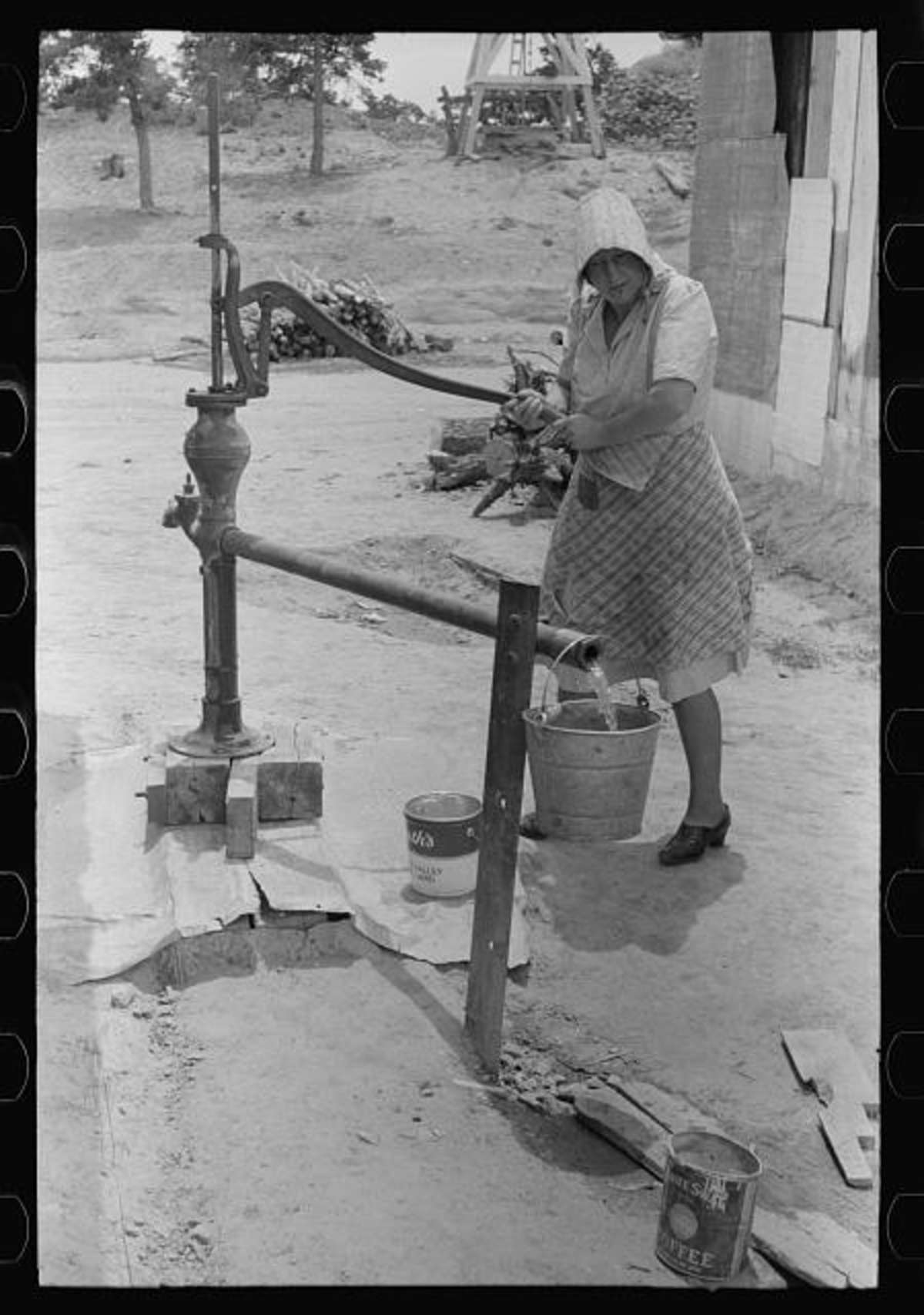
Library of Congress, Prints and Photographs Division, the Farm Security Administration and Office of War Information Photograph Collection, the featured photograph of a woman pumping water at Pie Town, New Mexico, by Russell Lee, June 1940