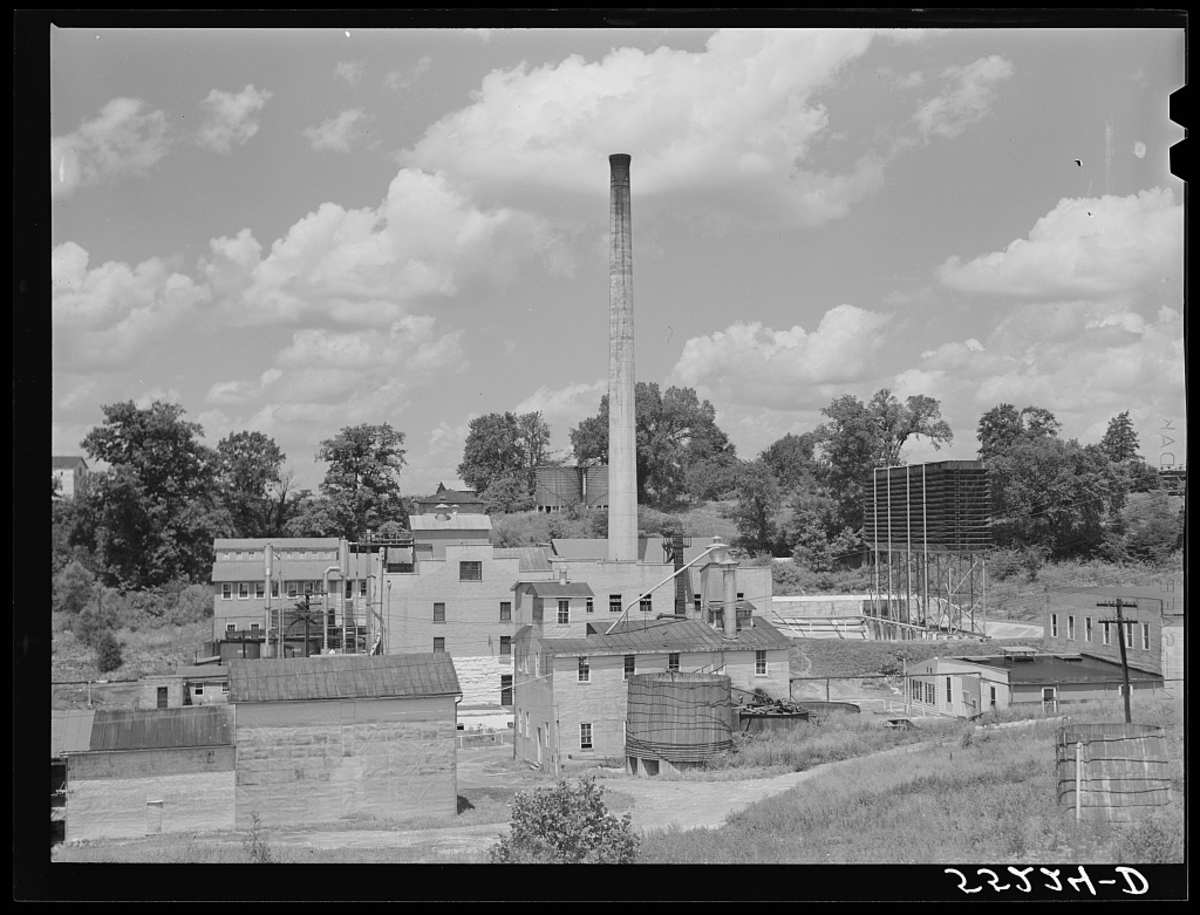
Prohibition ended in December 1933 and the stills kept running, because the federal tax on a proof gallon of whiskey rose from two dollars in 1934 to nine dollars by 1944.
A legal distillery paid the government by the gallon before its whiskey reached a shelf. A man working a copper condenser in a canyon did not, and the difference between those two prices is the whole of the business that outlived Prohibition.
The Still Outlived Prohibition
Repeal is usually filed as an ending. The Twenty-first Amendment was ratified in December 1933, the saloons reopened, and the federal government went back to collecting a liquor revenue. The illicit trade did not close with the speakeasies. The Northern Gila County Historical Society, writing about moonshining on the Mogollon Rim, puts it flatly: in 1933 the Twenty-first Amendment brought Prohibition to an end, the saloons went back to business as normal, and the production of moonshine continued. The reason it gives is the Depression. In country where a good year brought a family five hundred dollars, whiskey was a way to make money. Arizona’s own dry years are covered separately here: https://duanekeelingbooks.com/blog/prohibition-in-arizona-moonshine-and-the-mexican-border
A Tax Per Gallon
The federal liquor tax is charged on the proof gallon, and the Alcohol and Tobacco Tax and Trade Bureau still publishes the whole historical table of rates. From 12 January 1934 the rate on distilled spirits generally was two dollars a proof gallon. On 1 July 1938 it rose to two dollars and twenty-five cents, with brandy held at two. On 1 July 1940 it rose again to three dollars, brandy at two seventy-five. That is what the Treasury took before a distiller had paid for grain, barrels, labour or freight. On that arithmetic alone, a man who ran off a hundred proof gallons in a week in 1940 stood three hundred dollars ahead of the bonded house down the road.
The Alcohol Tax Unit
Collecting the money was a police problem, and the Treasury built an agency for it. The Alcohol Tax Unit sat inside the Bureau of Internal Revenue from 1934 until 1951, and the Bureau of Alcohol, Tobacco, Firearms and Explosives, which descends from it, states the job in one sentence: law enforcement was critical, not only to stamp out illegal alcohol production, but also to enforce alcohol tax collection. For scale, a letter entered into the record of a Senate Finance subcommittee in July 1935 quotes a New York Times report of 17 March 1935: two thousand one hundred and ten people arrested, and in about twenty-four hours nine hundred moonshine stills taken, with a combined daily capacity of 219,866 gallons.
Arizona Taxed It Too
Arizona added a tax of its own, and it did not wait for the Twenty-first Amendment. The first state luxury tax on liquor came in under the laws of the 1933 first special session, chapter eighteen, effective 28 June 1933: ten cents on each container of spirituous liquor of sixteen ounces or less, and ten cents on each sixteen ounces in anything larger. The Legislature’s own history of the tax records it as temporary at first, due to expire on 1 March 1935, then extended and restated that March at five cents on each container of eight ounces or less. A bottle sold legally in Arizona carried two taxes. A bottle that never passed a licence carried neither.
The Wartime Rates
Then the federal rate began to climb, and it climbed fastest once the country went to war. On 1 October 1941 the tax on distilled spirits went from three dollars to four dollars a proof gallon. On 1 November 1942 it went to six. On 1 April 1944 it went to nine, and there it stayed until the end of 1951. In ten years the Treasury’s share of a proof gallon had multiplied by four and a half, and every rise widened the gap the untaxed distiller was selling into.
What the Novel Takes
The Stone Vigil puts a crew in that gap. High in the Chiricahuas, a disused working the book calls the Silver-Strike mine is reopened in the last days of September 1941. The portal is reframed with fresh lumber. Electric wire runs a hundred feet into the rock from a diesel generator. Corn mash goes sour enough to be smelled from the ridgeline when the wind turns, whiskey ages in barrels in the main chamber, and wooden crates stencilled Agricultural Equipment stack against the stone. The novel never mentions the liquor tax. It does not have to. The week they arrive is the last week of the three-dollar rate.
The Stone Vigil, book two of The Ridge Watcher: https://duanekeelingbooks.com/books/the-stone-vigil
Sources
The Alcohol and Tobacco Tax and Trade Bureau, historical tax rates, Table 1, distilled spirits
The Bureau of Alcohol, Tobacco, Firearms and Explosives, historical article on the Alcohol Tax Unit of the Bureau of Internal Revenue, 1934 to 1951
United States Senate, Subcommittee of the Committee on Finance, hearing on the taxation of distilled spirits, 23 July 1935
The Arizona Joint Legislative Budget Committee, Historical Tax Law Changes, luxury tax on liquor
The Northern Gila County Historical Society, at the Rim Country Museum, on Prohibition and Payson Dew
Library of Congress, Prints and Photographs Division, the Farm Security Administration and Office of War Information collection, the featured photograph of a distillery near Bardstown, Nelson County, Kentucky, by Marion Post Wolcott, July 1940