Backstory

The Bisbee Deportation of 1917: 1,186 Men in Cattle Cars On 12 July 1917,

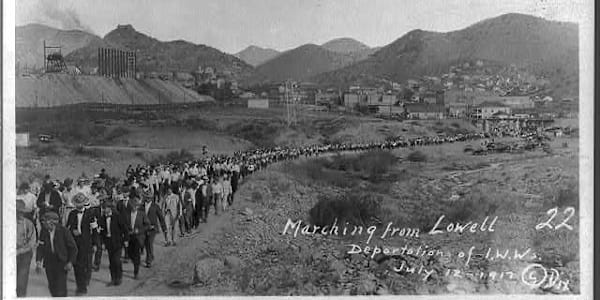
On 12 July 1917, two thousand sworn deputies rounded up 1,186 men in Bisbee, Arizona, loaded them into cattle cars and left them in the New Mexico desert without food or water.

The Bisbee Deportation of 1917: 1,186 Men in Cattle Cars

Bisbee sat in a narrow canyon in the Mule Mountains, a few miles north of the Mexican border. In 1917 it was one of the richest copper districts in the world, and it belonged, in every practical sense, to two companies: Phelps Dodge and the Calumet & Arizona....
Bloody Bill Anderson and the Missouri Guerrilla War William T. Anderson was

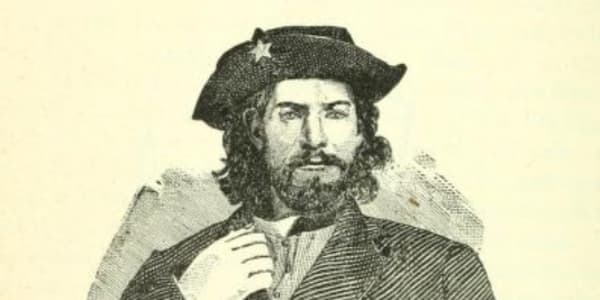
William T. Anderson was dead at about twenty-five, killed by Missouri militia in October 1864 — fourteen months after a Kansas City jail collapsed on his three sisters.

The man Missouri remembers as Bloody Bill Anderson spent barely three years at war. He was born in Hopkins County, Kentucky, most likely in 1839, though the year is not settled and Anderson himself claimed Missouri as his native state. His father moved the family to Missouri and then, in 1857, onto a claim near Council Grove,...

Billy the Kid Became a Legend the Year He Died Billy the Kid was shot dead

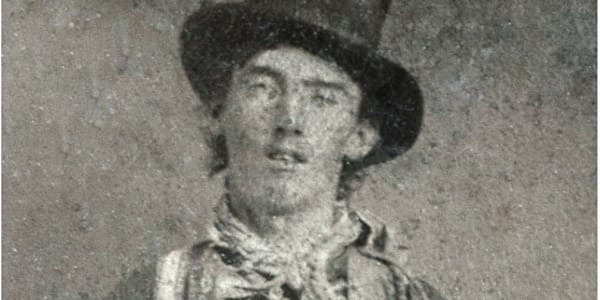
Billy the Kid was shot dead at Fort Sumner in July 1881, and a New York publisher had a book about him on the street before the year ended — the legend never needed the record.

Pat Garrett fired twice into a darkened bedroom at Fort Sumner, on the Pecos, on 14 July 1881, and Billy the Kid died without knowing who shot him. He was twenty-one. Forty years later, in a cattle camp in northern Mexico, men who had never set foot in Lincoln County were still using his name as a unit of measurement —...

Geronimo Surrendered in 1886. Not Every Apache Did. In September 1886 the

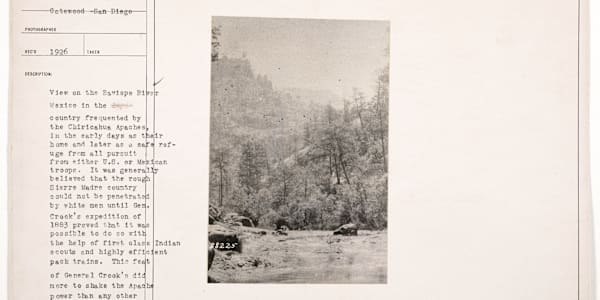
In September 1886 the United States exiled every Chiricahua Apache it could find, including the scouts who had served the Army against Geronimo. It could not find all of them.

Geronimo Surrendered in 1886. Not Every Apache Did.

The removal was meant to be total, and on paper it was.

Everyone, Including the Scouts

Geronimo came in at Skeleton Canyon in early September 1886 with a few dozen people. What followed applied to a whole nation. Between April and November of that year, 515 Chiricahua were...

The Centralia Massacre of 1864: The Bait at the Depot and the Trap at

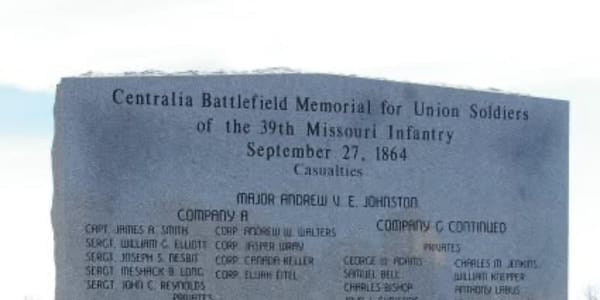
On 27 September 1864, eighty guerrillas took Centralia, Missouri, and left twenty-six dead men arranged on the depot platform — bait for the three hundred waiting at Young's Creek.

Centralia was a railroad town of a few hundred people in northern Boone County, and holding it for six hours accomplished nothing military. That was not what the morning was for. What happened on the depot platform was staged, and it was staged for a Federal column that had not arrived yet.

Sterling Price had crossed...

The Remount Rush: How the Great War Emptied the West's Horse Ranches

Between 1914 and 1918 Britain bought 672,303 horses and mules from the United States, and one animal that met the army's specification could be worth a season of any other work.

In 1918 a horse was not livestock. It was ordnance, and there were several armies bidding.

What a Remount Was

A remount was a replacement — for an animal killed, crippled, or worked to death at the front — and it was a category before it was a horse. The armies graded by the job. Lighter animals went to the cavalry,...

The Ghost of a Winchester .30-30: Acoustic Shadow in Canyon Country An

An acoustic shadow can swallow a rifle shot fired a few hundred yards off while the same shot carries clearly for miles. It is the air that does that, not the canyon wall.

A .30-30 leaves the muzzle at roughly twice the speed of sound. It should be impossible to miss. In the Chiricahuas it is not.

Twice the Speed of Sound

The cartridge arrived in 1895, in the Winchester Model 1894, and it is still the rifle most likely to be behind a saddle in that country. A standard 150-grain load leaves a...