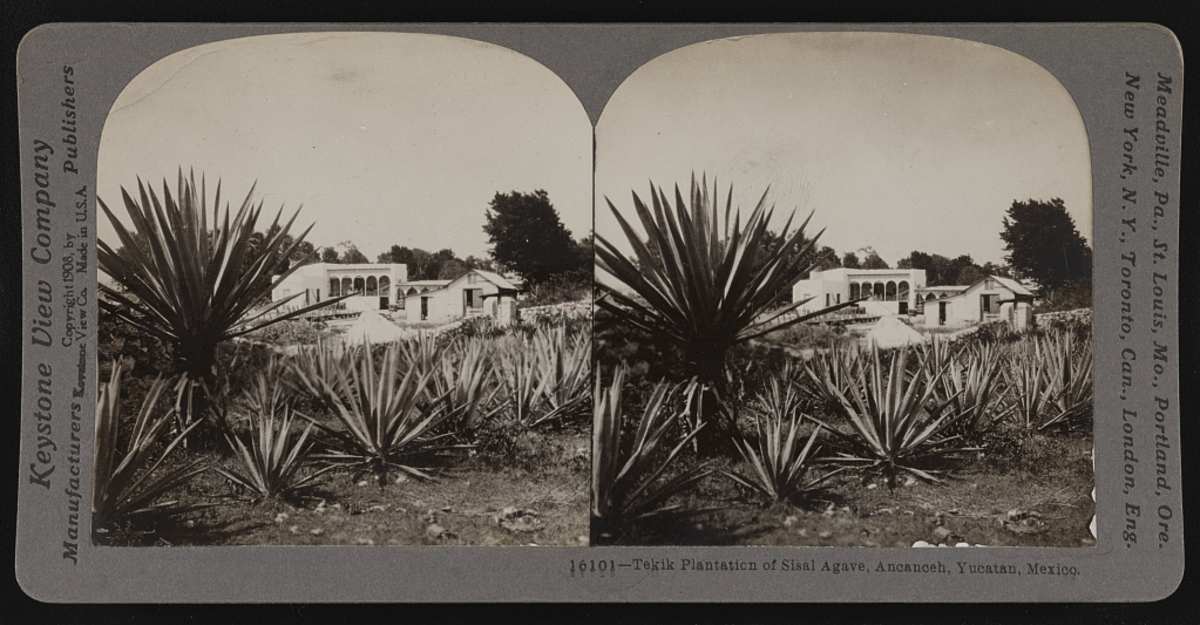
Between 1902 and 1908 the Díaz government shipped thousands of Yaqui people out of Sonora to the henequen plantations of Yucatán, where the planters paid sixty-five pesos a head.
In 1908 an American journalist named John Kenneth Turner travelled through Mexico posing as a wealthy investor shopping for plantation land. What he was doing was counting people who had been sold. The articles he published the following year, gathered into the book “Barbarous Mexico,” described a labour system the Díaz government insisted did not exist, and the part that did the most damage concerned the Yaqui of Sonora.
The policy was neither secret nor improvised. Turner reported that the president had issued a sweeping order decreeing that every Yaqui, wherever found, men women and children, should be gathered up. The people actually removed were mostly not the fighters holding out in the Sierra de Bacatete. They were the ones who had done what the state told them to do.
Sixty-Five Pesos
Turner’s figure came from Colonel Francisco Cruz, the officer who ran the transports and who talked freely to a man he took for a buyer. These Yaquis, Turner wrote, sell in Yucatan for sixty-five pesos apiece — men, women and children. Cruz said he had delivered fifteen thousand seven hundred Yaquis to Yucatán over three and a half years, and that lately he had been moving five hundred a month.
That price explains who was taken. Turner found Yaqui working men seized daily from mines, railroads and farms — old working men, he wrote, who never owned a rifle in their lives. The official justification was that the labourers supported the fighters; an army physician Turner spoke to called that a pretext. A man in the mountains with a rifle was worth nothing to a plantation. A man already broken to wage work was worth sixty-five pesos, and whatever he left behind went to the men who took him.
The Road South
The journey was the first part of the sentence. Deportees left Sonora through Guaymas on government boats, were put ashore down the coast at San Blas, crossed the sierra on foot, and went on by rail to Veracruz, where a second ship carried them across the Gulf to Progreso. It took weeks. Cruz, still talking to a supposed investor, put the loss at ten to twenty per cent on the journey alone. He gave it the way a shipper gives a figure for breakage.
Green Gold
What waited at Progreso was the most profitable agriculture in Mexico. Henequen is an agave whose leaves yield the fibre that bound the world’s wheat harvests, and it grew on the thin limestone of northwestern Yucatán at a scale nowhere else could match. Turner counted fifty henequen kings holding most of the land and most of the workers, and he put the number of people held in bondage across the state at more than a hundred thousand: between a hundred thousand and a hundred and twenty-five thousand Maya, three thousand Chinese, and eight thousand Yaqui brought in from Sonora.
The Yaqui were the smallest of the three groups and they died the fastest. Turner asked a planter directly. Don Enrique Camara Zavala told him that two-thirds of the Yaquis died during the first year.
The Contested Count
How many went is not settled and probably cannot be. Turner’s fifteen thousand seven hundred rests on one boastful officer. Evelyn Hu-DeHart, who has done more than anyone to audit these numbers, treats the total as difficult to calculate and Turner’s figure as likely inflated: the whole Yaqui population was something on the order of thirty thousand, and a deportation of fifteen thousand would have been half a people. The 1910 census counted 2,757 Sonorans living in Yucatán, which is certainly too low, since a man held on a hacienda is not a census respondent. The Texas Band of Yaquis gives a range of eight to fifteen thousand across 1902 to 1908.
What the sources agree on is the shape. The removals intensified from 1904, the heaviest shipments came in June and July of 1908 — one July steamer carried some eight hundred men, women and children — and the business ran as long as the government that ordered it. Díaz fell in 1911. In Yucatán the estates held their workers by debt until 1915, when Salvador Alvarado arrived as governor and enforced an existing decree freeing the peons. Yaqui who could walk started north. Others had crossed into Arizona ahead of the trains, which is why there are Yaqui communities in Tucson and Guadalupe today.
Why This Book
“Tohua!” opens in Sonora in 1903 and spends its first six chapters inside the deportation years, long before its hero is anywhere near a ship. Families go from the ranchería one at a time — the Rodríguez in April, the Castillos in July, the Herreras in September — and a boy watches his uncle unfold and refold a carta de seguridad, the labour passbook that was supposed to mean the government had counted you as safe. The novel puts Turner’s price on the page, in the mouth of a soldier who has stopped believing in paper: sixty-five pesos per head in Yucatán, and that is what the Morales family was worth. The road it walks afterwards is the documented one — Guaymas, San Blas, Tepic, San Marcos, Veracruz, Progreso, Mérida — and the fields at the end of it are the ones Camara Zavala was talking about.
Tohua! is one man’s walk down that road and back.
Sources
- John Kenneth Turner, “Barbarous Mexico” — the Colonel Cruz interviews, the sixty-five peso price, the death rate on the journey and the Yucatán plantation figures
- Evelyn Hu-DeHart, “Development and Rural Rebellion: Pacification of the Yaquis in the Late Porfiriato,” Hispanic American Historical Review 54:1, February 1974, Duke University Press — the audit of the totals, the 1904 to 1909 intensification and the 1910 census figure
- Evelyn Hu-DeHart, “Yaqui Resistance and Survival: The Struggle for Land and Autonomy, 1821 to 1910,” University of Wisconsin Press
- The Texas Band of Yaquis, published tribal history
- Library of Congress, Prints and Photographs Division