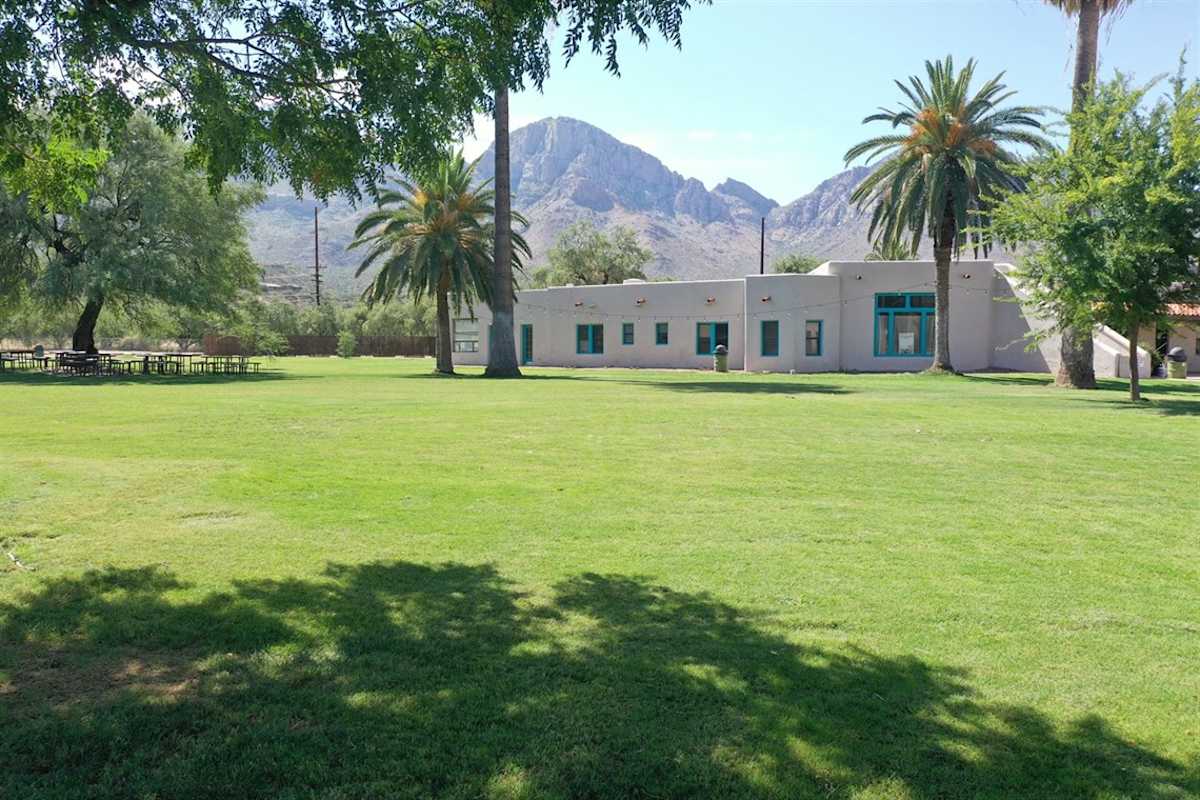
George Pusch fired a steam pump with mesquite wood over a well north of Tucson in the 1870s, and the ranch that grew around it became the last reliable water on the road north.
What put a place on the map of southern Arizona was not a town site or a fort. It was water a stranger could count on. A well that failed in June was worth nothing to a freighter with sixteen mules. A well that held was worth stopping for, and a stop was worth money.
Twenty miles north of Tucson, on the road running up the Cañada del Oro, a German butcher built one of those stops and put an engine on it.
Bavaria to Tucson
George Pusch was born in 1847 and left Bavaria as a young man, landing in New York at eighteen in 1865. He worked his way west over roughly the next ten years, and in 1874 he settled in Tucson. Archaeology Southwest, in its technical report on his later holdings, records that he opened a butcher shop there shortly afterward with another immigrant acquaintance, John Zellweger.
A butcher needs cattle. The two men bought a ranch north of town along the Cañada del Oro and registered the PZ brand. What they had was grass, distance, and a well.
A Mesquite Fire
In the late 1870s Pusch and Zellweger put a steam-pump-driven well on the place, and the ranch took its name from the machine. The National Register nomination is precise about what that meant locally: the use of a steam engine, fueled with locally harvested mesquite wood, to power a pump ushered in a new era of water control techniques in the Tucson Basin. The Oro Valley Historical Society holds that it was only the second such pump in the Arizona Territory.
Feed it mesquite, raise steam, lift water. The pump house went up in the late 1870s, its first room roughly twenty feet by twenty-three, on a foundation of alluvial river rock with stones better than a foot and a half across. The nomination reports that the pump could draw up to fifty gallons an hour, three to four hundred gallons a day. A Sonoran adobe ranch house followed around 1880, and Zellweger sold his interest to Pusch in 1883.
Fifteen Cents a Head
The nomination puts the commercial case in a sentence: the ranch had a convenient distance from Tucson and a reliable water source, and that made it an important stop on the stagecoach road. The historical society reckons the trip from town at four hours behind a horse and carriage, a morning out and a morning back.
Stock drank for money, at fifteen cents a head by the historical society’s account. Army patrols camped there. The stage lines are named differently by different sources, and that is the point: the National Register nomination describes the route as the stagecoach road between Tucson and Camp Grant; the historical society records a Wells Fargo stage running from Tucson to Florence; the town’s cultural resources report has William Neal running a line from Tucson to the mines at Mammoth with a stop at the ranch. The lines changed. The water did not.
The Long Decline
Pusch did not stay small. From 1885 he bought land along the San Pedro River, and by 1899 he held nearly eighteen hundred acres there with three water-right and ditch claims. The community of Feldman, which carries his wife’s family name, got its post office in 1911. He sat in the Territorial Legislature, served several terms on the Tucson City Council, took part in the Constitutional Convention of 1910, and sat on the Arizona Livestock Sanitary Board. Pusch Peak and the Pusch Ridge Wilderness above Oro Valley still carry his name.
Then the body went. In 1914 he suffered the first of a series of strokes, and in 1917 he was declared an incompetent person. He died on 20 August 1921 at his house on South Fourth Avenue in Tucson, seventy-four years old. His son took over the ranch that same month, and the family held it into the following decade. Exactly how and when it left them is told three different ways by three different sources.
Why This Book
Path of the Peacemaker is a life rather than a plot, and every chapter is titled with its year. It closes in November 1924, with Bee Adkins riding north out of the Double H toward his family in Chandler with five dogs strung out around the horse.
He stops at Steam Pump Ranch. The book calls it the last reliable outpost before the long stretch of flat desert, and his reason is practical: he needs a way to carry dogs across ground that would ruin their paws. He pays two hundred dollars for an oak buckboard and a draft horse, loads four water barrels, and takes five days to reach Chandler by way of Florence. The horse comes a few years past the boom in The Remount Rush: How the Great War Emptied the West’s Horse Ranches.
The novel does not tell the ranch’s story and never names Pusch. It does not have to. The reason a man on that road in 1924 pulled up there is the reason the place existed at all: dependable water at the right distance out, taken on before flat country. By then the pump was nearly fifty years old and the man who lit the first fire under it had been dead three years.
Path of the Peacemaker follows Bee Adkins from a Texas farmhouse in 1903 to that November road.
Sources
- National Park Service, National Register of Historic Places registration form for Steam Pump Ranch, Pima County, Arizona, listed 2 September 2009
- Andy Laurenzi, George Pusch’s San Pedro Ranch and Feldman, Arizona, Technical Report No. 2015-101, Archaeology Southwest, Tucson, 2015
- The Oro Valley Historical Society, its Steam Pump Ranch history and its Pusch family history
- Town of Oro Valley, Rock Art, Ranch, and Residence: Cultural Resources in the Town of Oro Valley, William Self Associates Technical Report No. 2009-51, January 2010
- University of Arizona Libraries, Arizona Historical Indexes
- The Federal Register, weekly listing of historic properties, 6 November 2009